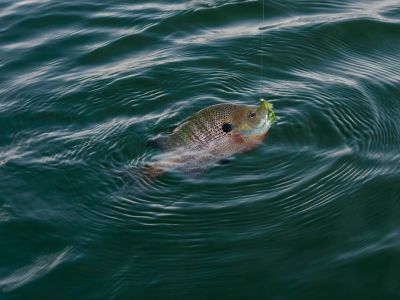
Straight Bluegill & Coppernose Bluegill for Pond Stocking
Straight & Coppernose Bluegill for Pond Stocking
Bluegill are one of the most important fish in a well-managed pond. They provide excellent recreational fishing while also serving as the primary forage fish for largemouth bass in many Oklahoma ponds.
Moore’s Fish Farm offers both Straight Bluegill and Coppernose Bluegill for pond stocking.
Straight Bluegill
Straight bluegill are a dependable choice for Oklahoma ponds and are commonly stocked as the foundation of a traditional bass and bluegill fishery.
They reproduce readily, providing a continuous supply of forage for largemouth bass while also producing excellent fishing on their own.
Straight bluegill are a good choice for:
- New pond stocking
- Establishing bass forage
- Recreational fishing
- Family fishing ponds
- Supplemental feeding programs
Coppernose Bluegill
Coppernose bluegill are a strain of bluegill known for their growth potential and distinctive appearance.
They are popular with pond owners interested in producing larger bluegill while still maintaining a reproducing forage population for largemouth bass.
Coppernose bluegill respond well to supplemental feeding and can produce impressive fish under good pond conditions and management.
Straight vs. Coppernose Bluegill
Both straight and Coppernose bluegill can provide excellent forage and recreational fishing.
Straight Bluegill are a proven choice for establishing a dependable forage population and balanced bass-bluegill fishery.
Coppernose Bluegill are often selected by pond owners interested in maximizing bluegill growth and producing larger fish.
Your location, pond conditions and management goals can help determine which is the better choice.
Why Are Bluegill Important for Bass?
A healthy bluegill population is one of the most important parts of growing healthy largemouth bass.
Bluegill reproduce multiple times and produce large numbers of young fish that become food for growing bass.
If your goal is producing quality bass, establishing and maintaining a strong bluegill population should be a major part of your pond-management plan.
Bluegill vs. Hybrid Bluegill
Regular bluegill and hybrid bluegill are not interchangeable.
Straight and Coppernose Bluegill reproduce readily and are commonly stocked to establish a long-term forage population.
Hybrid Bluegill have more limited reproduction and are generally stocked for fast growth and recreational fishing.
For ponds managed primarily for largemouth bass, regular bluegill are generally the better foundation for the forage population.
Feeding Bluegill
Bluegill readily accept commercial floating fish feed.
Supplemental feeding can help increase growth and overall production while providing an enjoyable opportunity to watch your fish feed.
Feeding can be particularly beneficial when the goal is producing larger bluegill.
How Many Bluegill Should I Stock?
The correct stocking rate depends on your pond size and management goals.
A pond managed for trophy largemouth bass may require a different bluegill stocking rate than a pond managed for balanced recreational fishing.
A general stocking rate is 500-1000 (2-3") per acre. More can be added depending on feeding and the existing pond population.
Bluegill Sizes & Pricing
2-3 Inch $.70 each
3-5 Inch $1.25 each
Sizes and availability vary throughout the year. Contact us for current inventory.
Stocking an Existing Pond?
If you're adding bluegill to an established pond containing largemouth bass, stocking size is important.
Small bluegill may quickly become forage before they have an opportunity to establish or reproduce.
Let us know what fish are already in your pond so we can help recommend an appropriate size and stocking plan.
Need Help Planning Your Pond?
Whether you're establishing a new bass-bluegill fishery or improving an existing pond, we can help you determine which bluegill and stocking rate best fit your goals.
Moore’s Fish Farm
Inola, Oklahoma
918-341-4194